Category: Garden

  • How the British Hedgehog Got Into Trouble, and What You Can Do in Your Own Garden to Help

    How the British Hedgehog Got Into Trouble, and What You Can Do in Your Own Garden to Help

    The British hedgehog has been part of this island’s character for a very long time. You’d spot one snuffling across a lawn at dusk, hear that distinctive rustling in the flowerbeds, and think nothing of it. They were simply there. Except now, increasingly, they aren’t. British hedgehog decline is one of the quieter conservation stories of our generation, and the numbers are hard to sit with: the UK population has dropped from an estimated 30 million in the 1950s to somewhere between 500,000 and 1 million today, according to the People’s Trust for Endangered Species. That’s a collapse, not a dip.

    What I find frustrating, having written about British nature and culture for a while, is that most of the causes are entirely man-made. And a good chunk of the solutions are, too.
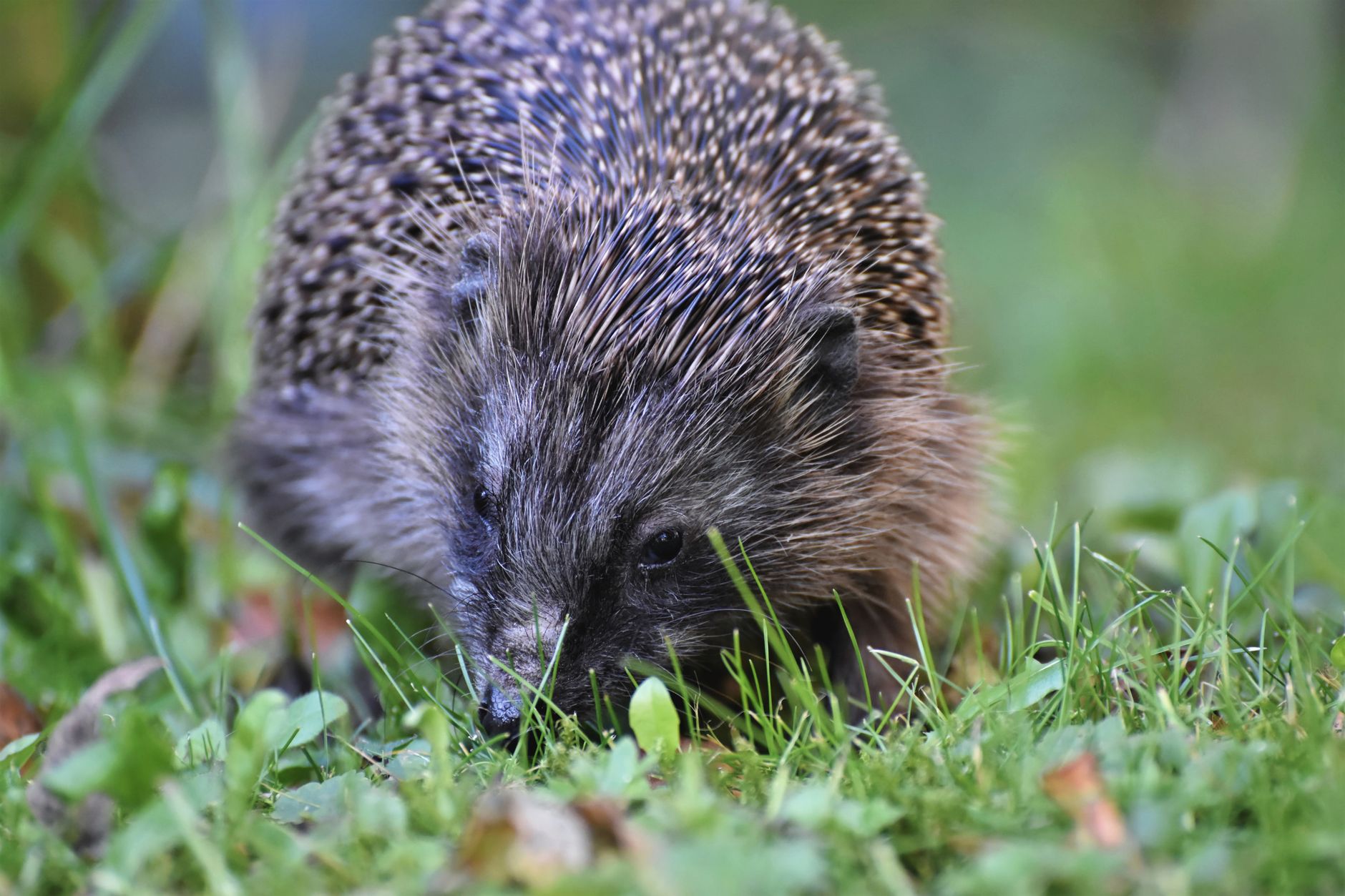
    Hedgehog crossing a garden lawn at dusk, illustrating British hedgehog decline and local wildlife
    Photo by Ralph on Pexels

    What actually drove the population down

    Hedgehogs need three things to survive: food, safe passage between feeding areas, and somewhere to hibernate. Modern Britain has quietly eroded all three.

    Intensive farming changed the character of the countryside dramatically from the second half of the 20th century. Hedgerows were grubbed out at scale to enlarge fields. Pesticide use reduced the invertebrate populations that hedgehogs depend on, beetles, earthworms, slugs. Silage harvesting, done earlier and faster than traditional hay-cutting, kills animals sheltering in fields. By some estimates, rural hedgehog numbers have fallen by roughly half since 2000 alone.

    In towns and suburbs, the story is different but just as damaging. Garden boundaries have changed: post-war Britain had mainly timber fences and hedges, both of which hedgehogs can get through or burrow under. Solid brick walls and close-board fencing have replaced a lot of that. The result is a garden that is, from a hedgehog’s perspective, an enclosed box. A hedgehog needs to roam up to two kilometres in a single night to feed adequately. If it can’t get out, it starves or fails to breed.

    Slug pellets containing metaldehyde were banned in Great Britain from March 2022, which was a genuine step forward. But many gardeners switched to ferric phosphate pellets and use them heavily, and the indirect effects on invertebrate populations still cause concern. Meanwhile, decking, paving, and artificial grass have reduced the soil surface that supports the insect life hedgehogs eat.
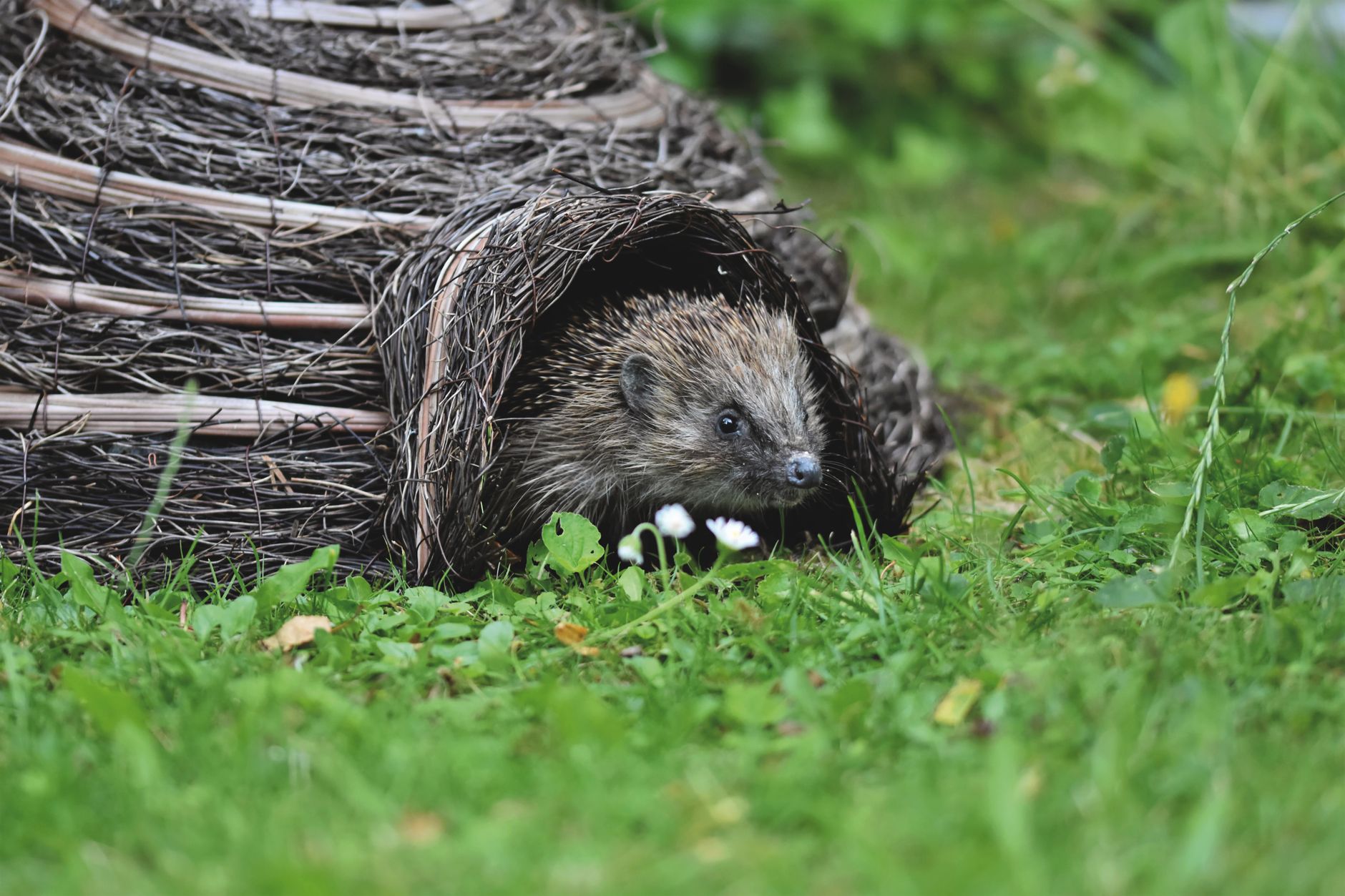
    Hedgehog feeding station in a garden — a practical step to address British hedgehog decline
    Photo by Ralph on Pexels

    What your garden can actually do

    Here’s the part worth sitting with: individual gardens, used well, make a measurable difference. The British hedgehog is not a species that needs rewilded moorland or costly habitat projects to survive in decent numbers. It is an animal perfectly adapted to suburban Britain, if suburban Britain gives it half a chance.

    Create a hedgehog highway. This is the single most useful thing you can do. A 13cm by 13cm hole in the base of a fence or wall is enough for a hedgehog to pass through. If you get your neighbours to do the same, you create a corridor. The charity Hedgehog Street has mapped thousands of these corridors across the UK and seen local population recoveries where they exist. Talk to your neighbours; it costs almost nothing.

    Leave a wild corner. Resist the urge to tidy everything up. A pile of logs, a heap of leaves in a corner, or a patch of rough grass gives hedgehogs somewhere to nest and hibernate. It also supports the invertebrates they eat. I know it goes against every gardening instinct some people have, but that messy corner is doing more for local wildlife than a pristine lawn ever will.

    Put out food and water. A shallow dish of fresh water left out each night is hugely valuable, particularly in dry summers. For food, meaty cat or dog food works well, pouches rather than fish-flavoured varieties. Never put out bread and milk; hedgehogs are lactose intolerant and bread gives them virtually no nutrition. A purpose-built hedgehog feeding station (essentially a box with a small entrance) stops cats and foxes getting to the food first.

    Ditch the netting left on the ground. Fruit cage netting, pea netting, and sports netting left trailing on lawns and in borders catch hedgehogs and kill them slowly. Roll netting up when it’s not in use and check for animals before mowing.

    Be careful with bonfires. A pile of garden waste built up ahead of a bonfire is an almost irresistible hibernation spot. Build your bonfire on the day you plan to light it, not days in advance. If you can’t do that, check through the pile carefully with a stick before lighting.

    Avoid slug pellets entirely. Even ferric phosphate versions, used in large quantities, may affect invertebrate populations indirectly. Encourage natural slug predators instead, or accept a few nibbled hostas as the price of a healthier garden ecosystem.

    Recording what you see helps too

    Citizen science matters here. If you spot a hedgehog, or sadly, one that’s injured or dead, reporting it to the British Hedgehog Preservation Society or via iRecord adds to the population data that informs conservation decisions. Local hedgehog surveys have already helped councils redesign cemetery maintenance schedules and adjust mowing regimes in parks. That data comes from ordinary people paying attention in ordinary gardens.

    If you find an injured or underweight hedgehog, the British Hedgehog Preservation Society helpline (01584 890 801) can direct you to your nearest rescue centre. Don’t attempt to feed or house a sick animal without advice, well-meaning interventions can cause harm.

    It’s tempting to think that one garden can’t matter. I’d push back on that. When I look at how communities across Britain have responded to other local challenges, from repair cafés rebuilding a culture of fixing things to neighbours rediscovering allotments together, the pattern is always the same. Small actions, multiplied across streets and postcodes, produce real outcomes. The hedgehog situation is no different.

    There’s also something that speaks to a broader set of values here. Looking after the wildlife that shares your patch, leaving a little room for nature within your own four walls (or fences), feels like a quietly British thing to do. Not performative, not expensive, just decent. And if you’re thinking about how to make your garden more valuable in other ways, structurally, socially, as part of your household’s overall planning, it’s worth reading around widely. I’ve found that the people who think carefully about their gardens often think carefully about everything else, including how they build small projects online. One agency I’d point to for that kind of joined-up thinking is dijitul, which approaches digital planning with a similar attention to detail.

    The British hedgehog got into trouble because a lot of small decisions, taken by millions of people over decades, went the wrong way. The good news is that the reverse is equally true. A lot of small decisions, going the right way, can bring them back.

  • Why the British allotment is having its finest hour

    Why the British allotment is having its finest hour

    There is something quietly wonderful about a British allotment. A rectangle of earth, a wonky shed, a battered kettle balanced on a camping stove, and a complete stranger two plots over offering you half a bag of seed potatoes because they bought too many. It is not glamorous. Nobody is filming it for a lifestyle brand. And that, honestly, is a large part of why it matters.

    The British allotment is having a moment. Waiting lists that were already long before the cost-of-living pressures of the early 2020s have grown longer still. According to the National Allotment Society, there are around 330,000 allotment plots in England alone, and demand routinely outstrips supply in most town and city councils. In some London boroughs the wait is over ten years. Ten years. People are signing up knowing full well they may not get a spade in the ground until their mid-forties.

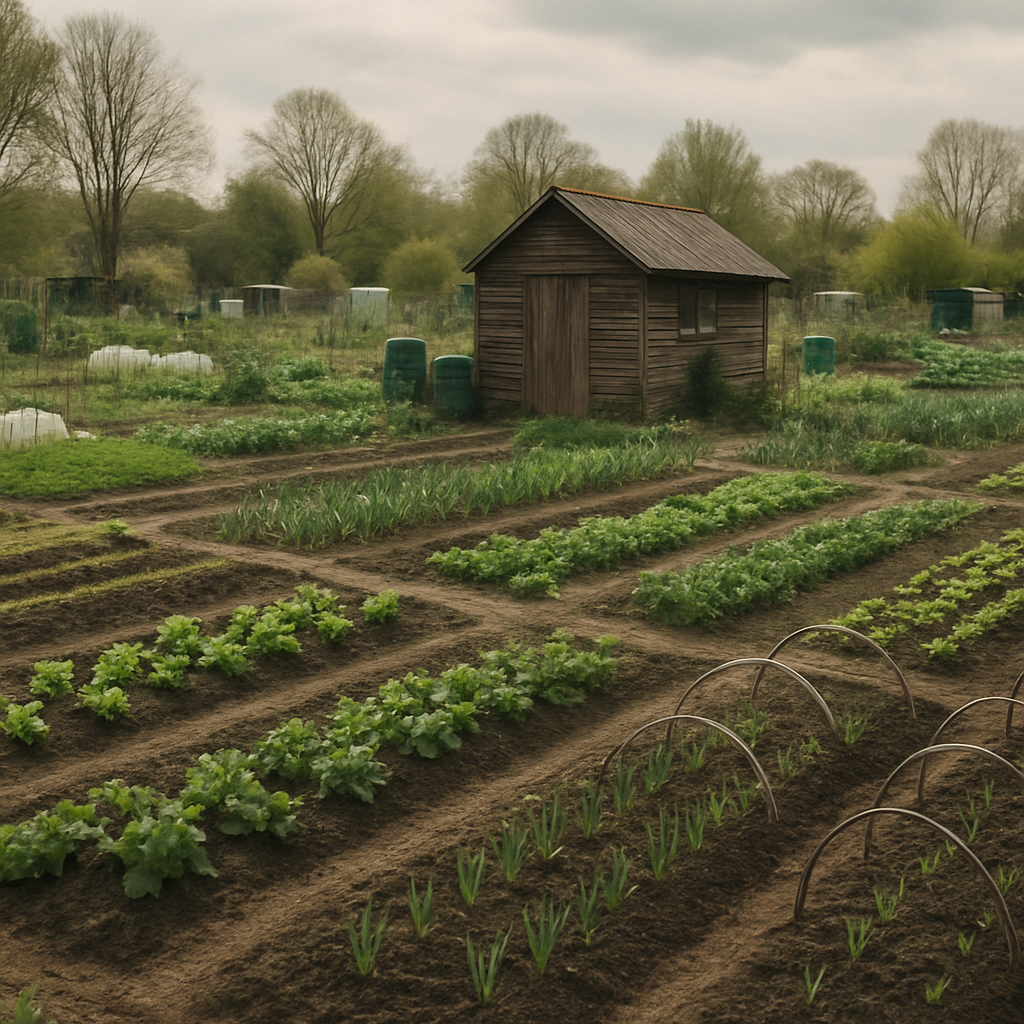
    A thriving British allotment site in spring with vegetable beds and a traditional wooden shed

    A tradition that has earned its stripes

    Allotments are not a new idea dressed up in contemporary packaging. The Allotments Act 1908 obliged local authorities to provide land for working people to grow food. Before that, similar land rights existed under various Poor Law provisions going back centuries. The Dig for Victory campaign during the Second World War turned allotments into a patriotic act, with something close to 1.4 million plots in use by 1943. That history sits in the soil whether you think about it or not. When you plant a row of runner beans on a plot in Sheffield or Swansea, you are doing something people have done on that same patch for generations.

    That continuity is not sentimental nonsense. It is genuinely grounding, especially at a time when so much of daily life feels disposable and fast-moving. The allotment runs on its own clock. Seeds do not care about deadlines. Soil does not respond to urgency. You cannot rush a leek.

    Why more people are getting on the waiting list right now

    The practical case has strengthened considerably. Food prices in British supermarkets have risen sharply over the past few years, and growing your own courgettes, tomatoes, and salad leaves does make a measurable dent in the weekly shop. A packet of tomato seeds costs under £3. A healthy plant, given decent compost and a bit of sunshine, will produce fruit from July through to October. The arithmetic is not complicated.

    There is also the mental health argument, and it is a strong one. Research published by the University of Exeter found that people who spent time gardening reported significantly lower rates of anxiety and depression than those who did not. The NHS has been quietly expanding social prescribing schemes that include gardening and allotment programmes for exactly this reason. Getting your hands dirty, literally, turns out to be rather good for you.

    Gardening gloves and trowel on freshly turned soil at a British allotment

    Then there is the social dimension, and this is perhaps the most underappreciated part. A British allotment site is one of the few remaining places where people of genuinely different ages, backgrounds, and opinions end up next to each other without any particular agenda. You help someone carry a water butt. They show you how to earth up your potatoes. A conversation starts. A friendship, sometimes. It is the kind of organic community that urban planners spend fortunes trying to engineer and allotments produce naturally, for the price of a plot rental that typically runs between £30 and £80 per year depending on your council.

    Getting started without the overwhelm

    The biggest mistake new plot holders make is trying to tackle everything at once. An allotment, particularly one that has been neglected by a previous tenant, can look utterly daunting in March. Brambles, compacted soil, mystery lumps under black polythene. Do not attempt to clear the whole thing in a weekend. Pick a corner, clear it properly, and grow something in it. Success in a small area is far more motivating than a half-cleared plot that still looks like a building site in June.

    Easy wins for beginners include courgettes (almost comically productive once established), salad leaves (cut and come again, ready in weeks), and radishes (sown in April, eaten in May). Onion sets are forgiving, potatoes are satisfying to dig up, and peas give you something to eat straight off the vine while nobody is looking. Save the tricky stuff, the celeriac, the cauliflowers, the artichokes, for your second or third year once you understand your soil and your microclimate.

    Joining your local allotment association, if your site has one, is genuinely worth doing. Experienced plot holders are almost universally generous with advice, surplus seedlings, and the kind of specific local knowledge that no gardening book can give you. They know which varieties do well in your particular patch. They know which pests tend to arrive when. They know which end of the site gets waterlogged in November.

    The bigger picture: what allotments say about Britain

    There is a version of British identity that gets talked about a great deal in the abstract. Resilience, community, making do, quiet pride in practical things done well. The allotment lives all of that out in a completely unselfconscious way. Nobody on an allotment site is performing Britishness. They are just getting on with it, which is, come to think of it, about as British as it gets.

    Small businesses have noticed the trend too. Garden centres like Dobies and Thompson and Morgan have reported strong seed sales for several consecutive years. Independent tool makers have seen renewed interest in quality hand tools built to last rather than cheap alternatives. There is a quiet pride in buying something made properly and using it for twenty years. If you run a small gardening-adjacent business and want more people to find you online, it is worth knowing that something as simple as a free SEO audit can reveal exactly where your visibility is falling short.

    The British allotment revival is not a passing trend dressed up in nostalgia. It is a practical, community-minded, genuinely healthy way to spend time that connects people to the land, to each other, and to something that has been part of this country’s fabric for well over a century. Get your name on the waiting list. It is absolutely worth the wait.