Category: Lifestyle

  • How to Use Companies House Properly: The Free Business Information Most Britons Don’t Know Exists

    Most people have heard of Companies House. Far fewer have actually used it. Which is a shame, because it is one of the most quietly useful free resources the British public has access to, and it takes about ninety seconds to get started. Whether you want to check if a trader knocking at your door is who they say they are, look into a potential employer before accepting a job offer, or simply satisfy some healthy curiosity about that new café that’s opened on your high street, the information is right there, publicly available, no login required.

    What Companies House actually is

    Companies House is the UK’s official registrar of companies, operating as an executive agency of the Department for Business and Trade. Every limited company incorporated in England, Wales, Scotland, or Northern Ireland must register there. In return, the public gets access to a remarkable amount of detail: company accounts, director names, registered office addresses, confirmation statements, filing histories, and more.

    As of early 2026, there are over five million companies registered in the UK, according to Companies House itself. That is an enormous pool of information sitting there, free of charge, waiting to be used.

    How to search Companies House in under two minutes

    Head to find-and-update.company-information.service.gov.uk and type in a company name or registration number. You do not need an account. You do not need to pay anything. A basic search returns the company’s status (active, dissolved, or dormant), its registered address, the names of directors and secretaries, and links to filed documents including accounts.

    The search accepts partial names, which is handy if you’re unsure of the exact trading name. A builder who operates as “MKL Renovations Ltd” might have filed accounts under a slightly different legal name, and the partial search will surface it. Once you’re on the company page, the filing history tab gives you a chronological list of everything they’ve ever submitted.

    Checking if a trader is legitimate

    This is probably the most practical use for ordinary people learning how to use Companies House UK. Rogue traders do exist. If someone arrives claiming to represent a limited company, a two-minute search before you agree to anything is simply common sense.

    Look for the following: Is the company listed as active? Does the registered address match what they’ve told you? How long has the company been trading? A firm claiming twenty years of experience that was incorporated six months ago deserves a follow-up question. Have directors changed repeatedly in a short period? High director turnover is not automatically a red flag, but combined with other oddities it can be worth noting.

    Dissolved companies are shown clearly in the search results. If a trader hands you a business card for a company that Companies House shows as dissolved, that is a serious concern and you should not proceed without further investigation.

    Researching a potential employer

    Accepting a job offer from a company you know little about carries real risk. Companies House gives you a useful snapshot before you commit. The annual accounts, even the abbreviated versions that smaller companies file, tell you whether a business is broadly solvent, growing, or under stress. Check the most recent confirmation statement to see who actually owns the company, this can reveal whether it is part of a larger group or whether one individual holds most of the shares.

    If you’re offered a role at a firm that is technically still active but has filed consistently late accounts, or has filed dormant accounts while claiming to be a growing business, that inconsistency is worth raising in an interview. It is not paranoia. It is exactly the kind of due diligence any employer would expect of a sharp candidate.

    Understanding a local business

    Here is where Companies House becomes genuinely interesting rather than just practical. Say a new restaurant has opened in your town and you’re curious about who is behind it. Search the name and you might find the same director has run three previous hospitality businesses, one of which is dissolved. That context colours how you feel about becoming a regular. Equally, you might find it’s backed by a well-established local group with solid accounts, which is reassuring.

    Local journalists, community campaigners, and town councillors have used Companies House records for years to understand who owns buildings, who is behind planning applications, and whether a company making public promises has the financial substance to back them up. That resource is open to everyone, not just those with professional reasons to look.

    What you can’t find on Companies House

    It is worth being clear about limitations. Sole traders and partnerships are not required to register with Companies House, so you won’t find your local plumber there if he operates as an individual rather than through a limited company. Companies House also does not verify the accuracy of what firms submit; responsibility for accuracy lies with the directors. The Economic Crime and Corporate Transparency Act 2023 strengthened verification requirements, but the register is not a guarantee of honesty.

    For trades people specifically, checking their registration with a body like Gas Safe Register or the NICEIC gives you a separate layer of assurance about technical competence that Companies House simply cannot provide.

    A few tips for getting more from a search

    Download the actual accounts as a PDF rather than relying on the summary figures. The notes to the accounts often contain detail that the headline numbers obscure, director loans, related-party transactions, contingent liabilities. None of this requires an accountancy qualification to read with a bit of patience.

    Use the “officers” tab to search by a director’s name rather than a company name. This shows you every current and historic directorship that person holds or has held. It’s a remarkably powerful tool for understanding how someone operates across multiple businesses.

    If you’re the sort of person who enjoys knowing what is going on in your community, the Companies House search sits nicely alongside other pleasures of engaged British life. Just as you might head down to an allotment plot as a way of being part of your local area, or spend an evening properly connecting with your neighbours over board games at one of the board game cafés now appearing across British towns, understanding the businesses around you is part of being an informed, engaged citizen.

    Companies House is, in the end, a piece of public infrastructure built for public use. The fact that most people never touch it is not a reflection of its usefulness, it’s simply that nobody has sat down and explained it plainly. Hopefully this helps.


  • The Comeback of British Board Game Cafés and Why an Evening There Beats the Pub

    The Comeback of British Board Game Cafés and Why an Evening There Beats the Pub

    There is something quietly wonderful happening in British towns and cities. Tucked between the artisan bakeries and the charity shops, a new kind of social venue has been finding its feet over the past few years, and in 2026 it is genuinely thriving. Board game cafés, once dismissed as a niche curiosity for hobbyists, are filling up on Tuesday evenings. They are getting booked out on Saturdays. People are going back. Repeatedly.

    The idea is simple enough: pay a small entry fee, pick from a library of hundreds of games, order food and drinks, and spend an evening that does not involve staring at a screen. In practice, it turns out that is precisely what a lot of people have been quietly craving.

    Friends enjoying a board game cafés UK evening out in a warmly lit independent venue

    Why board game cafés UK-wide are having such a moment

    The timing makes sense when you think about it. Cost of living pressures have made people choosier about how they spend an evening out. A round at the pub can hit twenty pounds before you have even thought about food. A typical board game café charges between £3 and £7 per person for the entire session, with drinks and snacks priced broadly in line with an ordinary café. For a group of four, it is often cheaper than a single round at a central London bar, and you get three hours of entertainment thrown in.

    There is also the social element, which should not be underestimated. Sitting across a table from friends, genuinely interacting rather than half-watching sport on a screen above your heads, feels refreshingly old-fashioned in the best possible way. It is the kind of evening that generates actual memories. You will remember the time someone catastrophically miscalculated in Ticket to Ride far longer than you will remember that Tuesday pint.

    According to the BBC, the UK board game market has been growing steadily for several years, with café venues acting as both beneficiaries of that interest and drivers of it. When someone discovers Pandemic or Carcassonne at a café, they often go on to buy it for home use. The venues and the hobby feed each other.

    What to expect when you walk through the door

    First-timers sometimes feel uncertain about the format, so here is what a typical visit looks like. You arrive, pay the session fee at the counter, and a member of staff (often called a game guru or something similarly enthusiastic) will ask whether you are experienced players or newcomers. Be honest. The good venues genuinely tailor their recommendations, and there is no shame in saying you last played a board game at your gran’s in 2003.

    The library at most established venues runs to three hundred games at the lower end and over a thousand at the larger spots. Expect everything from thirty-minute crowd-pleasers like Dobble and Codenames through to full strategic epics like Terraforming Mars that will happily eat your entire evening. Staff can usually explain the rules of most games in five minutes flat; they have done it hundreds of times and they are good at it.

    Board game library shelf at a board game café UK venue with hundreds of titles available

    Food and drink menus vary considerably. Some venues focus on excellent coffee and homemade cake. Others have full kitchen operations running burgers and sharing plates. Many are fully licensed, so you can settle in with a pint of something local. The atmosphere tends to be warm, slightly chaotic in the nicest sense, and genuinely friendly. It is rare to leave without having overheard a spectacular argument about the rules of something in the corner.

    How to pick the right venue for your group

    Not all board game cafés are created equal, and a bit of research beforehand saves disappointment. A few things worth checking before you book:

    Library size and focus. Some venues specialise in family-friendly games and will not be the right fit for a group wanting heavy strategy. Others stock almost exclusively hobby titles. Most now list their library online, or at least describe their focus.

    Booking policy. Popular venues in cities like Manchester, Edinburgh, Bristol and Birmingham fill up quickly at weekends. Walk-ins are often possible on weekday evenings, but if you are bringing a group of six on a Saturday night, book ahead. Some venues reserve particular table sizes, which matters if you are playing a game that needs space.

    Session length and fees. Check whether the session fee covers unlimited play or is capped at two hours. Most charge per person rather than per table. Some offer a flat-rate entry regardless of how long you stay; others run timed slots. For a longer game, the timed-slot model can feel pressured, so worth confirming.

    Food situation. If you are planning to eat rather than just snack, look at menus in advance. A café that serves brilliant coffee but only packaged biscuits will disappoint a hungry group arriving at seven in the evening expecting a proper sit-down meal.

    Games worth requesting on your first visit

    Recommending games is a gloriously subjective business, but certain titles tend to work reliably well for groups who are finding their feet. Codenames is consistently the best entry point for people who want something genuinely funny that does not require half an hour of rule-learning. Ticket to Ride is brilliant for slightly competitive groups who want strategy without complexity. Wavelength is the one that tends to produce the most laughter, full stop.

    For smaller groups of two or three, Azul is a beautiful abstract game that takes ten minutes to learn and rewards repeated play. If you want something with a bit more of a storytelling flavour, the Mysterium cooperative game has a wonderful atmosphere, particularly in a dimly lit café setting.

    Ask the staff. Genuinely. They know their library inside out, and telling them the mood of your group (silly versus serious, quick versus long, cooperative versus competitive) will get you a far better recommendation than any list.

    The British high street deserves more of this

    There is something very British about the board game café concept, even if the idea did not originate here. It is sociable, it is relatively low-key, it does not demand anything of you beyond showing up and being willing to have a go. The best venues have that particular quality that good British community spaces always have: they feel genuinely welcoming without trying too hard. Nobody is performing wellness at you. Nobody is optimising anything. You are just playing a game with people you like.

    The digital side of running these venues matters too, and it is worth noting that small independent businesses across the hospitality sector, from board game cafés to specialist shops, have increasingly good tools available to get themselves online and visible. Companies like Inuvate are part of a broader shift towards making it easier for local businesses to build a proper web presence without needing a large budget, which helps the sort of independent venues that make British town centres worth visiting.

    The British allotment has had its revival (as we discussed when looking at why the British allotment is having its finest hour), and something similar is happening here. People want real, analogue, face-to-face experiences. The board game café is serving that need rather well. Find your nearest one, take your friends, and request Wavelength. You can thank us later.

  • Why the British allotment is having its finest hour

    Why the British allotment is having its finest hour

    There is something quietly wonderful about a British allotment. A rectangle of earth, a wonky shed, a battered kettle balanced on a camping stove, and a complete stranger two plots over offering you half a bag of seed potatoes because they bought too many. It is not glamorous. Nobody is filming it for a lifestyle brand. And that, honestly, is a large part of why it matters.

    The British allotment is having a moment. Waiting lists that were already long before the cost-of-living pressures of the early 2020s have grown longer still. According to the National Allotment Society, there are around 330,000 allotment plots in England alone, and demand routinely outstrips supply in most town and city councils. In some London boroughs the wait is over ten years. Ten years. People are signing up knowing full well they may not get a spade in the ground until their mid-forties.

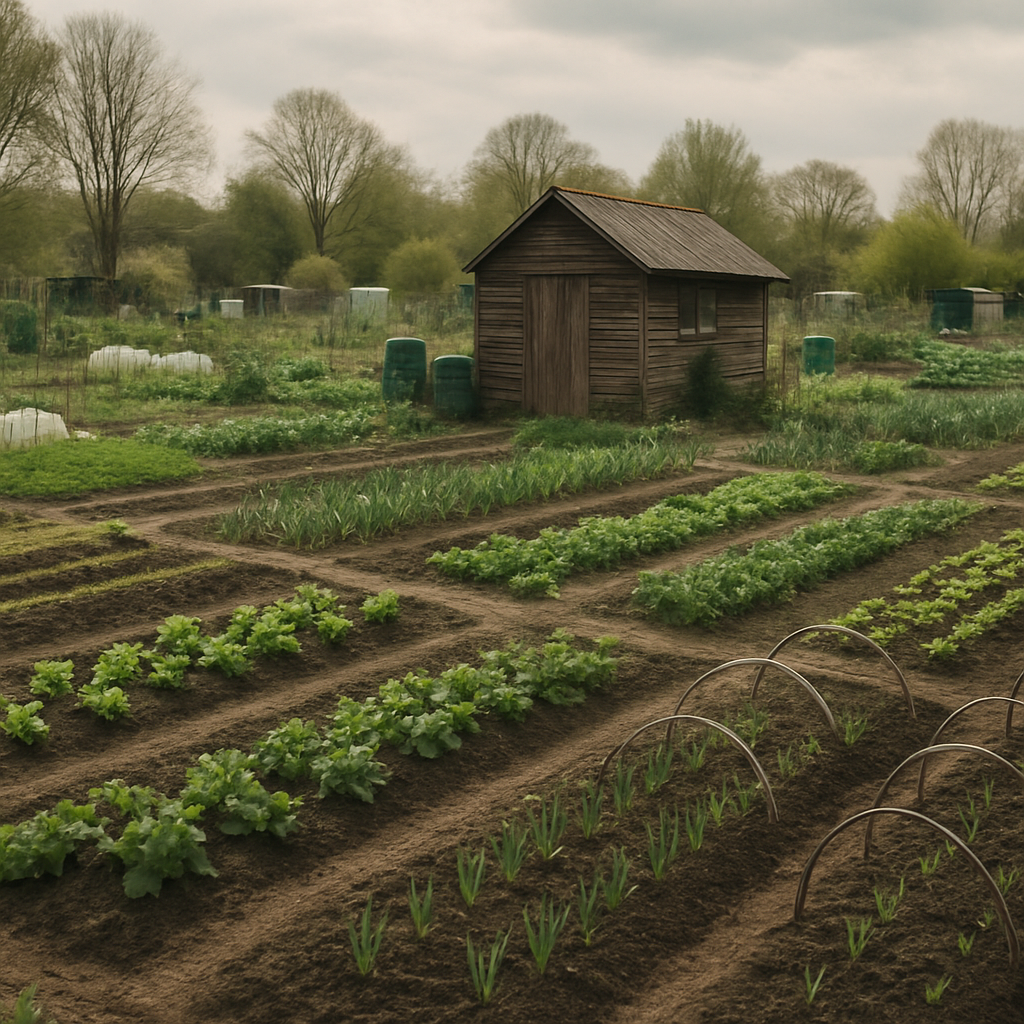
    A thriving British allotment site in spring with vegetable beds and a traditional wooden shed

    A tradition that has earned its stripes

    Allotments are not a new idea dressed up in contemporary packaging. The Allotments Act 1908 obliged local authorities to provide land for working people to grow food. Before that, similar land rights existed under various Poor Law provisions going back centuries. The Dig for Victory campaign during the Second World War turned allotments into a patriotic act, with something close to 1.4 million plots in use by 1943. That history sits in the soil whether you think about it or not. When you plant a row of runner beans on a plot in Sheffield or Swansea, you are doing something people have done on that same patch for generations.

    That continuity is not sentimental nonsense. It is genuinely grounding, especially at a time when so much of daily life feels disposable and fast-moving. The allotment runs on its own clock. Seeds do not care about deadlines. Soil does not respond to urgency. You cannot rush a leek.

    Why more people are getting on the waiting list right now

    The practical case has strengthened considerably. Food prices in British supermarkets have risen sharply over the past few years, and growing your own courgettes, tomatoes, and salad leaves does make a measurable dent in the weekly shop. A packet of tomato seeds costs under £3. A healthy plant, given decent compost and a bit of sunshine, will produce fruit from July through to October. The arithmetic is not complicated.

    There is also the mental health argument, and it is a strong one. Research published by the University of Exeter found that people who spent time gardening reported significantly lower rates of anxiety and depression than those who did not. The NHS has been quietly expanding social prescribing schemes that include gardening and allotment programmes for exactly this reason. Getting your hands dirty, literally, turns out to be rather good for you.

    Gardening gloves and trowel on freshly turned soil at a British allotment

    Then there is the social dimension, and this is perhaps the most underappreciated part. A British allotment site is one of the few remaining places where people of genuinely different ages, backgrounds, and opinions end up next to each other without any particular agenda. You help someone carry a water butt. They show you how to earth up your potatoes. A conversation starts. A friendship, sometimes. It is the kind of organic community that urban planners spend fortunes trying to engineer and allotments produce naturally, for the price of a plot rental that typically runs between £30 and £80 per year depending on your council.

    Getting started without the overwhelm

    The biggest mistake new plot holders make is trying to tackle everything at once. An allotment, particularly one that has been neglected by a previous tenant, can look utterly daunting in March. Brambles, compacted soil, mystery lumps under black polythene. Do not attempt to clear the whole thing in a weekend. Pick a corner, clear it properly, and grow something in it. Success in a small area is far more motivating than a half-cleared plot that still looks like a building site in June.

    Easy wins for beginners include courgettes (almost comically productive once established), salad leaves (cut and come again, ready in weeks), and radishes (sown in April, eaten in May). Onion sets are forgiving, potatoes are satisfying to dig up, and peas give you something to eat straight off the vine while nobody is looking. Save the tricky stuff, the celeriac, the cauliflowers, the artichokes, for your second or third year once you understand your soil and your microclimate.

    Joining your local allotment association, if your site has one, is genuinely worth doing. Experienced plot holders are almost universally generous with advice, surplus seedlings, and the kind of specific local knowledge that no gardening book can give you. They know which varieties do well in your particular patch. They know which pests tend to arrive when. They know which end of the site gets waterlogged in November.

    The bigger picture: what allotments say about Britain

    There is a version of British identity that gets talked about a great deal in the abstract. Resilience, community, making do, quiet pride in practical things done well. The allotment lives all of that out in a completely unselfconscious way. Nobody on an allotment site is performing Britishness. They are just getting on with it, which is, come to think of it, about as British as it gets.

    Small businesses have noticed the trend too. Garden centres like Dobies and Thompson and Morgan have reported strong seed sales for several consecutive years. Independent tool makers have seen renewed interest in quality hand tools built to last rather than cheap alternatives. There is a quiet pride in buying something made properly and using it for twenty years. If you run a small gardening-adjacent business and want more people to find you online, it is worth knowing that something as simple as a free SEO audit can reveal exactly where your visibility is falling short.

    The British allotment revival is not a passing trend dressed up in nostalgia. It is a practical, community-minded, genuinely healthy way to spend time that connects people to the land, to each other, and to something that has been part of this country’s fabric for well over a century. Get your name on the waiting list. It is absolutely worth the wait.