Category: Society

  • Why Joining a UK Running Club Is One of the Best Things You Can Do for Your Mental Health in 2026

    Why Joining a UK Running Club Is One of the Best Things You Can Do for Your Mental Health in 2026

    There’s a moment that most runners describe in almost exactly the same way. You turn up to a local running club for the first time, slightly nervous, possibly in trainers you bought three years ago and never quite broke in. Someone says hello before you’ve even found the sign-in sheet. By the end of the session, you’ve laughed at something, learnt someone’s name, and felt genuinely better than you did an hour ago. Not just physically. Something else shifts too.

    Joining a running club in the UK has quietly become one of the most accessible routes to better mental health going. And in 2026, with GP waiting lists still stretched and the cost of private therapy putting many people off, that matters more than ever. I’ve spoken to runners across different clubs and parkrun communities from Edinburgh to Exeter, and the story is remarkably consistent: the miles help, but the people help more.

    Group of people running together in a UK park, illustrating the social benefits of joining a running club for mental health
    Photo by cottonbro studio on Pexels

    What the NHS actually says about running and mental health

    The NHS is fairly clear on this. Its guidance on exercise for depression notes that regular physical activity can be as effective as antidepressants for mild to moderate depression in some people. Running, in particular, triggers the release of endorphins and serotonin, the brain’s own mood-regulating chemicals. But the NHS goes further than the biochemistry. Social connection, it points out, is a separate and equally important factor. Group exercise gives you both at once.

    That combination is why joining a running club in the UK for mental health reasons is genuinely worth taking seriously, rather than treating it as a secondary benefit to getting fitter. For many people who’ve joined clubs, the fitness followed the mood improvement, not the other way around.

    Parkrun: the gateway that changed everything

    You can’t discuss running culture in Britain without parkrun. Every Saturday morning, around 200,000 people across the UK walk, jog, and run 5 kilometres in their local parks, completely free of charge. It is one of the most extraordinary community movements this country has produced, and it started with a handful of people in Bushy Park in 2004.

    What makes parkrun special, beyond the obvious accessibility, is the culture. Tail walkers make sure nobody finishes last. Volunteers outnumber participants at some events. First-timers get a specific welcome briefing. The result is an environment where a 20-minute runner and a 40-minute walker finish the same event and feel equally celebrated. I’d argue that sense of genuine inclusion is rarer than it should be in sport, and it’s one of the reasons parkrun has become a genuine mental health resource. Some NHS surgeries now prescribe it as part of social prescribing schemes.

    Local running clubs and why they’re worth the slight awkwardness of joining

    Parkrun is the front door. A local running club is the living room. Most clubs in the UK are affiliated with England Athletics, Welsh Athletics, or their Scottish and Northern Irish equivalents, and they cater for every ability. The notion that running clubs are for fast people in Lycra is, thankfully, increasingly out of date.

    Clubs like Serpentine Running Club in London, Harriers groups in cities like Leeds and Birmingham, and hundreds of smaller community clubs in market towns across England have beginners’ groups that go out at comfortable conversational paces. The emphasis on talking whilst running is not incidental. It’s one of the things that makes group running psychologically distinct from solo exercise. You can’t ruminate on your anxieties when you’re explaining to someone that yes, you did once try to run a half marathon on two weeks’ training.

    The social side: why it goes beyond the run itself

    Ask anyone who’s been a club member for more than a few months and they’ll tell you the run is almost the secondary part. There are post-run coffees, WhatsApp groups, race-day supporters who come out to cheer you even when they’re not running, and the particular shared language of people who’ve done hard things together in bad weather.

    Loneliness is a significant public health concern in the UK. The Campaign to End Loneliness estimates that around 3.83 million people in England alone experience chronic loneliness. Running clubs don’t solve that on their own, but they create genuine repeated social contact with the same people, which is what actually builds connection. Not one-off events; regular, low-stakes meetings where you see the same faces and build something gradually.

    I’ve seen this play out with people who relocated to a new town and found their entire social circle through a club within six months. I’ve also seen it work for people coming out of difficult periods, divorce, bereavement, long illness, who needed structure and company without pressure. A run is not a therapy session. But it gives you the same rhythm, the same regularity, and often a remarkably similar sense of being heard.

    If you’re already thinking about how to get more involved in your local community more broadly, our piece on how to start volunteering in the UK covers other routes into exactly this kind of meaningful local connection.

    Getting started when you don’t feel ready

    The most common reason people don’t join a running club is that they feel they’re not good enough yet. They plan to get a bit fitter first, and then join. This is, affectionately, complete nonsense. Every club has beginners. Many clubs run Couch to 5K style programmes, particularly in January and September. You do not need to be able to run 5 kilometres before you turn up.

    The England Athletics club finder lets you search by postcode and filter by the type of running they focus on. Most clubs have a free trial session or two before asking for a membership fee, which typically runs between £20 and £60 a year, genuinely one of the better value social memberships available. Compare that to gym membership and the maths are stark.

    If you’re not ready for a club yet, parkrun is the obvious starting point. Show up at 9am on a Saturday, register for free online in advance, and walk the whole thing if you need to. Nobody will say a word except to encourage you.

    Running, place, and what it means to be British outdoors

    There’s something distinctly British about insisting on running in the rain and enjoying it, or at least pretending to. The running community here has a particular relationship with weather, seasons, and the outdoors that I find genuinely endearing. Clubs run through December. Parkrun goes ahead in the frost. There’s a shared commitment to being outside regardless of what the Met Office has to say about it.

    That connection to place matters psychologically. Studies in environmental psychology consistently show that outdoor exercise produces greater mood improvements than indoor exercise. Running along a canal towpath, through a municipal park, or across a common links you to your surroundings in a way that a treadmill simply doesn’t. It’s one of the reasons I always think of Britain’s coast and countryside as part of the same conversation about wellbeing, not a separate subject.

    We’re a country with a habit of underselling our communal spaces and the communities built around them. The allotment movement, the board game café revival, the hedgerow walkers, and yes, the runners gathering at dawn on a Saturday morning in parks across Britain: these are all expressions of the same instinct to be together, outdoors, doing something real. Joining a running club in the UK for your mental health isn’t a trendy wellness choice. It’s one of the oldest, most straightforwardly human things you can do.

    And someone will definitely say hello before you find the sign-in sheet.

    Frequently Asked Questions

    Does joining a running club actually help with anxiety and depression?

    The NHS recognises regular aerobic exercise as an effective tool for managing mild to moderate depression and anxiety. Running in a group adds a social component that amplifies those benefits, giving you both the biochemical effects of exercise and the psychological lift of genuine human connection.

    How do I find a running club near me in the UK?

    England Athletics has a free club finder on their website where you can search by postcode and filter by club type. Most clubs offer a free trial session or two before you need to commit to a membership fee, which typically costs between £20 and £60 a year.

    What is parkrun and is it suitable for beginners?

    Parkrun is a free, weekly 5km community event held every Saturday morning in parks across the UK. You register once at parkrun.org.uk and can attend any event anywhere. It’s genuinely open to all abilities, including walkers, and has a tail walker who ensures no one finishes alone.

    Do I need to be able to run 5km before joining a club?

    No. Most UK running clubs welcome complete beginners, and many run structured beginner programmes similar to Couch to 5K. Turning up before you feel ready is, counterintuitively, exactly the right time to join.

    Is outdoor group running better for mental health than going to the gym?

    Research in environmental psychology consistently shows that outdoor exercise produces greater mood improvements than indoor exercise. Combine that with the social aspect of a running group and the benefits stack up in a way that a solo gym session simply can’t replicate.

  • The Gentle Art of the British Seaside Off-Season: Why October Is the Best Time to Visit the Coast

    The Gentle Art of the British Seaside Off-Season: Why October Is the Best Time to Visit the Coast

    There is something about a seaside town in October that August simply cannot give you. The candyfloss stalls are shuttered, the car parks half-empty, and the sea is doing what the sea is actually supposed to do: looking grey, enormous, and completely indifferent to your presence. I’ve been visiting British coastal towns out of season for years now, and I’d argue the british seaside off season autumn experience is one of the finest, most underrated things this country offers.

    It requires a certain disposition, admittedly. You have to be willing to accept a stiff wind off the North Sea as part of the package, and to find pleasure in a chippy that closes at half seven. But if you can manage that, what awaits is a version of Britain that feels genuinely itself rather than dressed up for visitors.

    Empty seaside pier on a grey autumn morning, capturing the quiet atmosphere of the British seaside off season autumn
    Photo by Magda Ehlers on Pexels

    Why the crowds leaving is the point

    Whitby in August is magnificent in its own chaotic way, packed with Goths making the pilgrimage for the Whitby Goth Weekend, families queuing for Magpie Café fish and chips, and day-trippers climbing the 199 steps to the abbey. Whitby in October is a different proposition entirely. The harbour smells of salt and diesel and not much else. The abbey ruins look exactly as Bram Stoker intended them to look. You can stand on the West Cliff and hear nothing but the water and the odd gull, and feel, briefly, like you are the only person who has ever discovered this place.

    Tenby in Pembrokeshire does something similar. By late September the multicoloured Georgian townhouses are still there, the harbour is still beautiful, but the ice-cream queues have gone. You can walk around the old town walls at your own pace and stop whenever you like. The pubs along the quay are warm and not too full. Locals actually want to talk to you. I had one of the best conversations of my life in a Tenby pub in mid-October with a retired lifeboat volunteer who had seen things off that coast I still think about.

    The honest affordability of going in autumn

    This matters more than people let on. British seaside towns can be eye-wateringly expensive in peak summer, particularly for accommodation. A B&B in Cromer that charges £180 a night in July might well be £90 in October, and that is before you factor in cheaper petrol on the drive there, shorter queues at every attraction, and the simple fact that you are not paying a premium to share a beach with three hundred other families.

    The VisitEngland research consistently shows that domestic short breaks in autumn represent strong value compared to peak season travel, and the coastal towns benefit most from this shift. Many guesthouses and small hotels actively want the business in quieter months and are genuinely glad to see you rather than simply processing you through.

    Cromer, on the north Norfolk coast, is worth singling out here. It still has a working pier, a proper Victorian hotel right on the seafront, and crab fishing boats that go out regardless of the season. Cromer crab in October, eaten at a pavement table with the wind doing its worst, is a genuinely British pleasure. The town is small enough that you can walk its entirety in an afternoon, find a second-hand bookshop, buy something unnecessary from an ironmonger that has been there since 1973, and feel absurdly content.

    The particular beauty of melancholy by the sea

    I want to say something about the atmosphere without making it sound gloomy, because it is not gloomy exactly. It is something more interesting than that. British seaside towns in the off-season carry a quality that is hard to name but instantly recognisable: a kind of wistfulness, a sense of time slowed down and turned slightly inward. The amusement arcades still flash their lights, but there is nobody in them. The beach huts are locked up and look strangely dignified for it. Seagulls own the place again.

    This mood is part of our national character, I think. We have always responded to the sea with something more complicated than cheerfulness. Our literature is full of it, from Hardy to Patrick Hamilton to Helen Dunmore. There is a reason so many people feel moved rather than simply relaxed when they stand on a British beach in autumn. The sea in October does not pretend to be hospitable, and there is a honesty in that which the sanitised resort version can never quite replicate.

    If you enjoy the slower, more contemplative side of British life, you might also find yourself drawn to other off-season pleasures. I have written before about how the countryside offers its own quiet rewards for those willing to look, and spotting the riches of a British hedgerow on a walk between coastal villages is exactly the kind of thing that makes an autumn break feel genuinely enriching rather than just a change of scenery.

    How to actually plan a quiet coastal break

    The practical side is simpler than people expect. Most small seaside towns have accommodation open through October and into early November. Ring the guesthouse directly rather than booking through a third-party platform, because many smaller places offer better rates for direct bookings and you get a much clearer picture of what is actually open nearby.

    Check before you go which specific attractions have reduced hours. Some smaller museums and heritage sites move to weekend-only opening from October, so it is worth a quick look at their websites. Whitby Abbey, managed by English Heritage, is open year-round. Tenby’s medieval town walls and castle are always accessible. Cromer Pier theatre runs shows into autumn. There is nearly always more to do than you expect.

    Pack for the weather honestly. A waterproof that actually works, walking boots if you plan on any coastal paths, and layers you can add and subtract. The Met Office forecasts for coastal areas are generally reliable a few days out. Beyond that, you accept whatever comes, which is itself part of the spirit of the thing.

    If the seaside break appeals to you as part of a broader appreciation for what Britain does quietly and well, it sits nicely alongside other low-key pleasures worth championing. The revival of board game cafés in British towns is another sign that people are actively choosing experiences that are slower, more social, and more genuinely satisfying than the headline options. And for those who want that connection with place and season even closer to home, the case for the British allotment in its current golden moment makes much the same argument: that turning towards quieter, rooted things is not a retreat but a return to something worthwhile.

    Go before the season locks the door

    The window is shorter than it seems. By mid-November, some of the smaller coastal towns genuinely do close up in ways that feel almost theatrical. The last weekend of October, with the clocks going back and the light changing overnight, is perhaps the finest moment of all. You lose an hour of afternoon but gain something stranger and better in return.

    Book a room somewhere you have never been. Drive to the coast on a Tuesday. Eat chips from paper. Walk until your ears ache from the cold. This is the british seaside off season autumn in its truest form, and there is nothing quite like it anywhere else on earth.

    Frequently Asked Questions

    Which British seaside towns are best to visit in autumn?

    Whitby in North Yorkshire, Tenby in Pembrokeshire, and Cromer in north Norfolk are all particularly rewarding in autumn. Each has enough year-round infrastructure, working harbours, and historical character to make an off-season visit genuinely worthwhile rather than just a compromise on summer.

    Is the British seaside worth visiting in October when many places are closed?

    More is open than most people assume. Major attractions like Whitby Abbey and coastal paths are accessible year-round, and pubs, restaurants, and many guesthouses continue trading through October. Checking specific opening hours in advance takes five minutes and is always worth doing.

    How much cheaper is it to visit the British seaside off-season in autumn?

    Accommodation prices can be 30 to 50 per cent lower compared to peak July and August rates, particularly for B&Bs and independent guesthouses that price seasonally. Car parks, attractions, and even fish and chip shops are cheaper or have shorter queues, making the overall trip noticeably more affordable.

    What should I pack for an autumn seaside break in the UK?

    A genuinely waterproof jacket is essential, not just water-resistant. Add walking boots or stout shoes if you plan coastal path walks, and pack thermal base layers because coastal winds make temperatures feel sharper than inland forecasts suggest. The Met Office coastal forecasts are reliable up to five days ahead and worth checking before you go.

    Are there family-friendly options at British seaside towns in the off-season?

    Yes, though the offering shifts from summer. Rock pools, coastal wildlife, heritage sites, and local museums are all perfectly suited to families with children. Many seaside towns in Norfolk and Yorkshire have interactive crab fishing experiences that run into autumn, and the lack of crowds makes everything considerably more relaxed.

  • The British Hedgerow Is One of Our Greatest National Treasures, Here’s How to Spot Its Riches

    The British Hedgerow Is One of Our Greatest National Treasures, Here’s How to Spot Its Riches

    There is a line of hawthorn and blackthorn running along the edge of a lane near my parents’ house in Shropshire that I’d guess is older than the parish church. Gnarled, thick at the base, tangled with dog rose and bramble, it has been there so long it’s almost geological. Most people drive past it at 40 miles per hour without a second glance. I’ve spent entire evenings just standing beside it, listening. If you’ve never tried british hedgerow wildlife spotting properly, slowly, quietly, at dusk, you’re missing one of the best free experiences this country offers.

    Ancient British hedgerow lining a country lane at dusk — ideal for british hedgerow wildlife spotting
    Photo by Irina Iriser on Pexels

    Why hedgerows matter more than most people realise

    Britain has roughly 500,000 kilometres of hedgerow, according to the Department for Environment, Food and Rural Affairs. That’s an extraordinary network of habitat, acting as corridors for wildlife to move between woodlands, fields, and waterways. A single ancient hedgerow can contain over 600 species of insects. The older the hedge, the richer it tends to be, there’s a rough rule of thumb (though ecologists debate the details) that you can estimate a hedge’s age in centuries by counting the number of woody species in a 30-metre stretch.

    These are not decorative features. They’re living infrastructure. And the good news is that you don’t need to travel anywhere special to find them. A country lane on the edge of almost any British village will do the job. Pull on some walking boots, head out around sunset, and take your time.

    What you’re likely to find: the plants

    Before you look for animals, learn to read the hedge itself. Hawthorn is the workhorse, those tight white blossom clusters in May are called “may blossom” for a reason, and by October the branches are heavy with deep red haws that fieldfares and redwings strip bare. Blackthorn gives you sloe berries in autumn, bitter enough to make your face do something involuntary, but perfect steeped in gin come December.

    Crab apple is the one I always stop at. It’s smaller and scruffier than an orchard apple, and the fruit is tart and hard, but it has a quiet, patient beauty in late summer when the tiny fruits first blush. Elder is another constant companion: creamy flat-topped flowers in June for cordial, dark purple berries in late August for syrup. Knowing these plants turns a walk into a kind of reading exercise. Each one tells you something about the soil, the season, and who else is likely to be around.

    What to listen and look for: the animals

    Dormice are the jewel of the hedgerow and the one most people never see. They’re nocturnal, and they spend a large part of the year hibernating. But in a dense, well-established hedge with plenty of hazel, you’re in their territory. The People’s Trust for Endangered Species does a national dormouse monitoring programme, and the survey data shows their populations have declined by roughly 70% since the 1990s. Spotting one, curled in its neat little nest, feels genuinely rare.

    More reliably, you’ll encounter yellowhammers perched on the top wire of any fence running alongside the hedge, or hear their slightly maddening song (a bit like “a little bit of bread and no che-e-ese”) from somewhere deep in the tangle. Wrens dart in and out at the base with an energy that seems disproportionate to their size. Whitethroats arrive in May and chuck themselves about in scratchy, tuneless song from the highest stems. By late summer, listen for the churring of grasshopper warblers in thicker hedgerows near damp ground.

    Hedgehogs still use hedgerows as movement corridors, though I’d argue a hedgehog sighting deserves its own celebration these days given how hard-pressed the species is. Bats, pipistrelles mostly, will start hunting along the hedge line at dusk, weaving between the branches with that slightly jerky, purposeful flight. I tend to bring a bat detector on late summer evenings; it turns what would otherwise be a silent, invisible spectacle into something you can actually experience.

    How to walk a hedgerow properly

    The main thing is to slow down. Most people walk at a pace that frightens everything within 20 metres. Aim for what I’d call a shuffling amble, move a few steps, stop, stand still for a minute, look carefully before moving again. Your eyes need time to adjust and your brain needs time to separate signal from noise. Dusk is ideal because the light is low and many animals are starting to move, but also because the lane is quieter and the birds are doing their final rounds before roosting.

    Take a small notebook. Not a phone, a notebook. Jotting down what you see and hear forces you to look more carefully and builds a record of the season that’s genuinely satisfying to revisit. I’ve got notebooks going back years, and flicking through them now is like reading a diary of the countryside.

    British hedgerow wildlife spotting is, in the best sense, humble. You’re not going on safari. You’re not ticking off a list of rarities. You’re standing on a lane that has been there for centuries, watching the ordinary machinery of the natural world do its thing. That ordinariness is the point.

    Making it part of a wider habit

    If evenings beside the hedge appeal to you, they pair naturally with other slow, grounded British habits. The allotment community has seen a real resurgence in recent years, if you’re curious about that, I wrote about why the British allotment is having its finest hour and much of what draws people to growing their own overlaps with what draws people to the hedgerow: patience, seasonal rhythm, and the satisfaction of paying close attention. Similarly, the quiet sociability of community engagement generally is something I find myself drawn to more and more, there’s a piece here on how to start volunteering in the UK that’s worth a read if you want to turn that instinct into something with a bit more structure.

    The hedgerow doesn’t ask anything of you, which is part of why I love it. You just have to show up, be quiet, and look. Britain has spent centuries building these living walls along every lane and field boundary, and they’ve been quietly sheltering an astonishing amount of life the whole time. Go and see for yourself.

    Frequently Asked Questions

    What is the best time of year for british hedgerow wildlife spotting?

    Late spring through early autumn gives you the greatest variety, May and June for nesting birds and hawthorn blossom, July and August for bats and insects, September and October for berries and migrant thrushes. Winter hedgerows can also be rewarding for fieldfare and redwing sightings, especially in hedges heavy with haws and sloes.

    What wildlife can you find in an ancient British hedgerow?

    Ancient hedgerows can support hundreds of species including dormice, hedgehogs, yellowhammers, wrens, whitethroats, pipistrelle bats, and a vast range of invertebrates. The plant mix typically includes hawthorn, blackthorn, elder, dog rose, crab apple, and hazel, all of which provide food and shelter for different species at different points in the year.

    How do I tell if a hedgerow is ancient?

    A rough guide used by ecologists is to count the number of different woody shrub or tree species in a 30-metre stretch, each species is said to represent roughly a century of age. A hedge with five or six species (hawthorn, blackthorn, hazel, elder, field maple, dog rose) could therefore be 500 or more years old, though this method is a starting point rather than a precise science.

  • How to Start Volunteering in the UK When You Have No Idea Where to Begin

    How to Start Volunteering in the UK When You Have No Idea Where to Begin

    There’s something quietly wonderful about the fact that, according to the NCVO’s UK Civil Society Almanac, around 16 million people in England alone volunteer formally each year. That’s a staggering amount of goodwill. And yet, for those who haven’t done it before, volunteering in the UK can feel oddly difficult to break into. Where do you even look? What if you’re not retired? What if you only have three hours a fortnight? What if you’re worried you don’t have the right skills?

    I’ve heard every one of those concerns from friends who wanted to give something back but didn’t quite know how to get started. The good news is that the landscape has changed enormously in the past few years, and there genuinely is something for everyone. You just need to know where to look.

    Volunteers sorting donations outside a community hall, representing volunteering in the UK
    Photo by RDNE Stock project on Pexels

    Why now is a brilliant time to get involved

    Volunteering numbers took a real knock during the pandemic. Organisations lost regular helpers overnight, and many first-timers who’d been meaning to sign up simply never got round to it. Since 2023, though, numbers have been recovering steadily, and the infrastructure around volunteering has improved enormously. Platforms like Do-it and the NCVO’s own resources have made it far simpler to search by postcode, availability, and interest. You can sit on your sofa on a Tuesday evening and have a shortlist of local roles by Wednesday morning.

    There’s also been a noticeable cultural shift. Organisations are actively designing roles around people’s real lives rather than expecting volunteers to fit an old-fashioned nine-to-five mould. Weekend roles, remote roles, project-based roles that last six weeks rather than six years. The flexibility is genuinely there now.

    Finding a role that actually suits you

    The single biggest mistake first-timers make is saying yes to whatever comes up first and then burning out or dropping out because it wasn’t the right fit. Before you search for anything, spend five minutes thinking honestly about three things: what you’re good at, how much time you can reliably give, and what kind of environment makes you feel useful.

    If you’re handy with a spreadsheet, a local charity’s treasurer role or admin support is genuinely valuable. If you’re a good listener, organisations like Samaritans, Age UK, and the Citizens Advice Bureau are always in need. If you’d rather be outdoors doing something physical, conservation groups, community gardens, and canal restoration projects are crying out for volunteers. I’d argue that knowing what drains you is just as important as knowing what energises you. A role in a busy, noisy environment isn’t going to be a good fit for everyone, and that’s fine.

    On the time question: be honest. If you can only commit to one Sunday morning a month, say so upfront. Charities would far rather have someone reliable once a month than someone enthusiastic who quietly disappears after three weeks. The best organisations will tell you plainly what the minimum commitment looks like.

    Woman searching for volunteering in the UK opportunities on her laptop
    Photo by Tima Miroshnichenko on Pexels

    Where to search for volunteering opportunities near you

    The quickest starting point is do-it.org, which holds thousands of listings across the UK and lets you filter by distance, time commitment, and cause. Type in your postcode and you’ll get results within minutes. For a broader picture of the voluntary sector and resources for new volunteers, the NCVO website is thorough and genuinely readable.

    Your local council often maintains its own volunteering directory, and most towns and cities have a Volunteer Centre that can match you directly with local groups. These centres are particularly good if you want a conversation with a real person rather than scrolling through listings online. In many cases, they’ll do the matching for you once they know your situation.

    It’s also worth thinking about organisations you already have a connection with. Did your child attend a local youth theatre? Does a food bank operate near your workplace? Did a hospice support someone in your family? Starting somewhere personal often makes the commitment feel more meaningful from day one.

    What to expect from the sign-up process

    Some roles will have you started within a week. Others, particularly those involving work with children, vulnerable adults, or sensitive information, will require a DBS (Disclosure and Barring Service) check, which the organisation will usually arrange and fund on your behalf. Don’t be put off by this. It’s straightforward, and the organisation should guide you through it.

    Most reputable charities will offer some form of induction, even if it’s just a short briefing. You should also be given a named contact, a basic description of what’s expected, and a clear sense of what happens if something isn’t working. If any of those things are missing, it’s worth asking. A well-run volunteer programme will have them ready without you needing to chase.

    The British tradition of community spirit that drives everything from allotment societies to neighbourhood growing projects is the same spirit that keeps voluntary organisations ticking. Walking into that environment for the first time, you’ll find people who are pleased to see you. Most long-term volunteers will tell you the induction nerves dissolved within the first hour.

    Keeping it sustainable over time

    Volunteering in the UK should feel good, not guilt-ridden. If a role stops working for you, whether the timing shifts, your circumstances change, or you simply want to try something different, it’s completely acceptable to have that conversation with your coordinator. Good organisations understand that life moves. Stepping back gracefully is far better than gradually going absent.

    Many people find that volunteering opens unexpected doors: new skills, new friends, new perspectives on their own community. I’ve spoken to people who started helping at a local food bank and ended up running logistics for the whole site within a year, not because anyone pushed them, but because they found they loved it. That kind of quiet personal growth is one of volunteering’s least-advertised gifts.

    For those thinking about the digital side of community engagement, resources like Banner Ads can be useful when charities and community groups want to raise awareness of their volunteer drives online, a practical consideration for anyone involved in running a local organisation.

    If you’re the sort of person who also enjoys spending time in your community beyond formal volunteering, you might find that places like British board game cafés or local social enterprises are already part of the same network of people who care about where they live. That overlap is no coincidence. Community tends to attract community.

    Starting is genuinely the hardest part. Once you’ve made that first enquiry, the momentum tends to take care of itself. So go on. Your local community is very likely looking forward to meeting you.

    Frequently Asked Questions

    How do I find volunteering opportunities near me in the UK?

    The easiest place to start is do-it.org, where you can search by postcode, cause, and availability. Your local council or Volunteer Centre is also a great option if you’d prefer a conversation with someone who can match you directly to a suitable role.

    Do I need any qualifications or experience to volunteer in the UK?

    For the vast majority of roles, no qualifications are needed. Organisations are looking for reliability, enthusiasm, and a willingness to learn. Some specialist roles, such as legal advice or medical support, may require relevant experience, but these are clearly flagged in listings.

    How many hours a week do I need to commit to volunteering?

    This varies hugely by role. Many organisations now offer flexible commitments, including as little as a few hours a month or short-term project-based arrangements. Be upfront about what you can realistically manage and a good organisation will work around it.

    Will I need a DBS check to volunteer?

    Only for roles involving children, vulnerable adults, or certain sensitive environments. If a DBS check is required, the organisation will typically arrange and pay for it on your behalf. It usually takes a few weeks to process and is entirely standard.

  • How to Use Companies House Properly: The Free Business Information Most Britons Don’t Know Exists

    Most people have heard of Companies House. Far fewer have actually used it. Which is a shame, because it is one of the most quietly useful free resources the British public has access to, and it takes about ninety seconds to get started. Whether you want to check if a trader knocking at your door is who they say they are, look into a potential employer before accepting a job offer, or simply satisfy some healthy curiosity about that new café that’s opened on your high street, the information is right there, publicly available, no login required.

    What Companies House actually is

    Companies House is the UK’s official registrar of companies, operating as an executive agency of the Department for Business and Trade. Every limited company incorporated in England, Wales, Scotland, or Northern Ireland must register there. In return, the public gets access to a remarkable amount of detail: company accounts, director names, registered office addresses, confirmation statements, filing histories, and more.

    As of early 2026, there are over five million companies registered in the UK, according to Companies House itself. That is an enormous pool of information sitting there, free of charge, waiting to be used.

    How to search Companies House in under two minutes

    Head to find-and-update.company-information.service.gov.uk and type in a company name or registration number. You do not need an account. You do not need to pay anything. A basic search returns the company’s status (active, dissolved, or dormant), its registered address, the names of directors and secretaries, and links to filed documents including accounts.

    The search accepts partial names, which is handy if you’re unsure of the exact trading name. A builder who operates as “MKL Renovations Ltd” might have filed accounts under a slightly different legal name, and the partial search will surface it. Once you’re on the company page, the filing history tab gives you a chronological list of everything they’ve ever submitted.

    Checking if a trader is legitimate

    This is probably the most practical use for ordinary people learning how to use Companies House UK. Rogue traders do exist. If someone arrives claiming to represent a limited company, a two-minute search before you agree to anything is simply common sense.

    Look for the following: Is the company listed as active? Does the registered address match what they’ve told you? How long has the company been trading? A firm claiming twenty years of experience that was incorporated six months ago deserves a follow-up question. Have directors changed repeatedly in a short period? High director turnover is not automatically a red flag, but combined with other oddities it can be worth noting.

    Dissolved companies are shown clearly in the search results. If a trader hands you a business card for a company that Companies House shows as dissolved, that is a serious concern and you should not proceed without further investigation.

    Researching a potential employer

    Accepting a job offer from a company you know little about carries real risk. Companies House gives you a useful snapshot before you commit. The annual accounts, even the abbreviated versions that smaller companies file, tell you whether a business is broadly solvent, growing, or under stress. Check the most recent confirmation statement to see who actually owns the company, this can reveal whether it is part of a larger group or whether one individual holds most of the shares.

    If you’re offered a role at a firm that is technically still active but has filed consistently late accounts, or has filed dormant accounts while claiming to be a growing business, that inconsistency is worth raising in an interview. It is not paranoia. It is exactly the kind of due diligence any employer would expect of a sharp candidate.

    Understanding a local business

    Here is where Companies House becomes genuinely interesting rather than just practical. Say a new restaurant has opened in your town and you’re curious about who is behind it. Search the name and you might find the same director has run three previous hospitality businesses, one of which is dissolved. That context colours how you feel about becoming a regular. Equally, you might find it’s backed by a well-established local group with solid accounts, which is reassuring.

    Local journalists, community campaigners, and town councillors have used Companies House records for years to understand who owns buildings, who is behind planning applications, and whether a company making public promises has the financial substance to back them up. That resource is open to everyone, not just those with professional reasons to look.

    What you can’t find on Companies House

    It is worth being clear about limitations. Sole traders and partnerships are not required to register with Companies House, so you won’t find your local plumber there if he operates as an individual rather than through a limited company. Companies House also does not verify the accuracy of what firms submit; responsibility for accuracy lies with the directors. The Economic Crime and Corporate Transparency Act 2023 strengthened verification requirements, but the register is not a guarantee of honesty.

    For trades people specifically, checking their registration with a body like Gas Safe Register or the NICEIC gives you a separate layer of assurance about technical competence that Companies House simply cannot provide.

    A few tips for getting more from a search

    Download the actual accounts as a PDF rather than relying on the summary figures. The notes to the accounts often contain detail that the headline numbers obscure, director loans, related-party transactions, contingent liabilities. None of this requires an accountancy qualification to read with a bit of patience.

    Use the “officers” tab to search by a director’s name rather than a company name. This shows you every current and historic directorship that person holds or has held. It’s a remarkably powerful tool for understanding how someone operates across multiple businesses.

    If you’re the sort of person who enjoys knowing what is going on in your community, the Companies House search sits nicely alongside other pleasures of engaged British life. Just as you might head down to an allotment plot as a way of being part of your local area, or spend an evening properly connecting with your neighbours over board games at one of the board game cafés now appearing across British towns, understanding the businesses around you is part of being an informed, engaged citizen.

    Companies House is, in the end, a piece of public infrastructure built for public use. The fact that most people never touch it is not a reflection of its usefulness, it’s simply that nobody has sat down and explained it plainly. Hopefully this helps.

  • The Comeback of British Board Game Cafés and Why an Evening There Beats the Pub

    The Comeback of British Board Game Cafés and Why an Evening There Beats the Pub

    There is something quietly wonderful happening in British towns and cities. Tucked between the artisan bakeries and the charity shops, a new kind of social venue has been finding its feet over the past few years, and in 2026 it is genuinely thriving. Board game cafés, once dismissed as a niche curiosity for hobbyists, are filling up on Tuesday evenings. They are getting booked out on Saturdays. People are going back. Repeatedly.

    The idea is simple enough: pay a small entry fee, pick from a library of hundreds of games, order food and drinks, and spend an evening that does not involve staring at a screen. In practice, it turns out that is precisely what a lot of people have been quietly craving.

    Friends enjoying a board game cafés UK evening out in a warmly lit independent venue

    Why board game cafés UK-wide are having such a moment

    The timing makes sense when you think about it. Cost of living pressures have made people choosier about how they spend an evening out. A round at the pub can hit twenty pounds before you have even thought about food. A typical board game café charges between £3 and £7 per person for the entire session, with drinks and snacks priced broadly in line with an ordinary café. For a group of four, it is often cheaper than a single round at a central London bar, and you get three hours of entertainment thrown in.

    There is also the social element, which should not be underestimated. Sitting across a table from friends, genuinely interacting rather than half-watching sport on a screen above your heads, feels refreshingly old-fashioned in the best possible way. It is the kind of evening that generates actual memories. You will remember the time someone catastrophically miscalculated in Ticket to Ride far longer than you will remember that Tuesday pint.

    According to the BBC, the UK board game market has been growing steadily for several years, with café venues acting as both beneficiaries of that interest and drivers of it. When someone discovers Pandemic or Carcassonne at a café, they often go on to buy it for home use. The venues and the hobby feed each other.

    What to expect when you walk through the door

    First-timers sometimes feel uncertain about the format, so here is what a typical visit looks like. You arrive, pay the session fee at the counter, and a member of staff (often called a game guru or something similarly enthusiastic) will ask whether you are experienced players or newcomers. Be honest. The good venues genuinely tailor their recommendations, and there is no shame in saying you last played a board game at your gran’s in 2003.

    The library at most established venues runs to three hundred games at the lower end and over a thousand at the larger spots. Expect everything from thirty-minute crowd-pleasers like Dobble and Codenames through to full strategic epics like Terraforming Mars that will happily eat your entire evening. Staff can usually explain the rules of most games in five minutes flat; they have done it hundreds of times and they are good at it.

    Board game library shelf at a board game café UK venue with hundreds of titles available

    Food and drink menus vary considerably. Some venues focus on excellent coffee and homemade cake. Others have full kitchen operations running burgers and sharing plates. Many are fully licensed, so you can settle in with a pint of something local. The atmosphere tends to be warm, slightly chaotic in the nicest sense, and genuinely friendly. It is rare to leave without having overheard a spectacular argument about the rules of something in the corner.

    How to pick the right venue for your group

    Not all board game cafés are created equal, and a bit of research beforehand saves disappointment. A few things worth checking before you book:

    Library size and focus. Some venues specialise in family-friendly games and will not be the right fit for a group wanting heavy strategy. Others stock almost exclusively hobby titles. Most now list their library online, or at least describe their focus.

    Booking policy. Popular venues in cities like Manchester, Edinburgh, Bristol and Birmingham fill up quickly at weekends. Walk-ins are often possible on weekday evenings, but if you are bringing a group of six on a Saturday night, book ahead. Some venues reserve particular table sizes, which matters if you are playing a game that needs space.

    Session length and fees. Check whether the session fee covers unlimited play or is capped at two hours. Most charge per person rather than per table. Some offer a flat-rate entry regardless of how long you stay; others run timed slots. For a longer game, the timed-slot model can feel pressured, so worth confirming.

    Food situation. If you are planning to eat rather than just snack, look at menus in advance. A café that serves brilliant coffee but only packaged biscuits will disappoint a hungry group arriving at seven in the evening expecting a proper sit-down meal.

    Games worth requesting on your first visit

    Recommending games is a gloriously subjective business, but certain titles tend to work reliably well for groups who are finding their feet. Codenames is consistently the best entry point for people who want something genuinely funny that does not require half an hour of rule-learning. Ticket to Ride is brilliant for slightly competitive groups who want strategy without complexity. Wavelength is the one that tends to produce the most laughter, full stop.

    For smaller groups of two or three, Azul is a beautiful abstract game that takes ten minutes to learn and rewards repeated play. If you want something with a bit more of a storytelling flavour, the Mysterium cooperative game has a wonderful atmosphere, particularly in a dimly lit café setting.

    Ask the staff. Genuinely. They know their library inside out, and telling them the mood of your group (silly versus serious, quick versus long, cooperative versus competitive) will get you a far better recommendation than any list.

    The British high street deserves more of this

    There is something very British about the board game café concept, even if the idea did not originate here. It is sociable, it is relatively low-key, it does not demand anything of you beyond showing up and being willing to have a go. The best venues have that particular quality that good British community spaces always have: they feel genuinely welcoming without trying too hard. Nobody is performing wellness at you. Nobody is optimising anything. You are just playing a game with people you like.

    The digital side of running these venues matters too, and it is worth noting that small independent businesses across the hospitality sector, from board game cafés to specialist shops, have increasingly good tools available to get themselves online and visible. Companies like Inuvate are part of a broader shift towards making it easier for local businesses to build a proper web presence without needing a large budget, which helps the sort of independent venues that make British town centres worth visiting.

    The British allotment has had its revival (as we discussed when looking at why the British allotment is having its finest hour), and something similar is happening here. People want real, analogue, face-to-face experiences. The board game café is serving that need rather well. Find your nearest one, take your friends, and request Wavelength. You can thank us later.

  • Why the British allotment is having its finest hour

    Why the British allotment is having its finest hour

    There is something quietly wonderful about a British allotment. A rectangle of earth, a wonky shed, a battered kettle balanced on a camping stove, and a complete stranger two plots over offering you half a bag of seed potatoes because they bought too many. It is not glamorous. Nobody is filming it for a lifestyle brand. And that, honestly, is a large part of why it matters.

    The British allotment is having a moment. Waiting lists that were already long before the cost-of-living pressures of the early 2020s have grown longer still. According to the National Allotment Society, there are around 330,000 allotment plots in England alone, and demand routinely outstrips supply in most town and city councils. In some London boroughs the wait is over ten years. Ten years. People are signing up knowing full well they may not get a spade in the ground until their mid-forties.

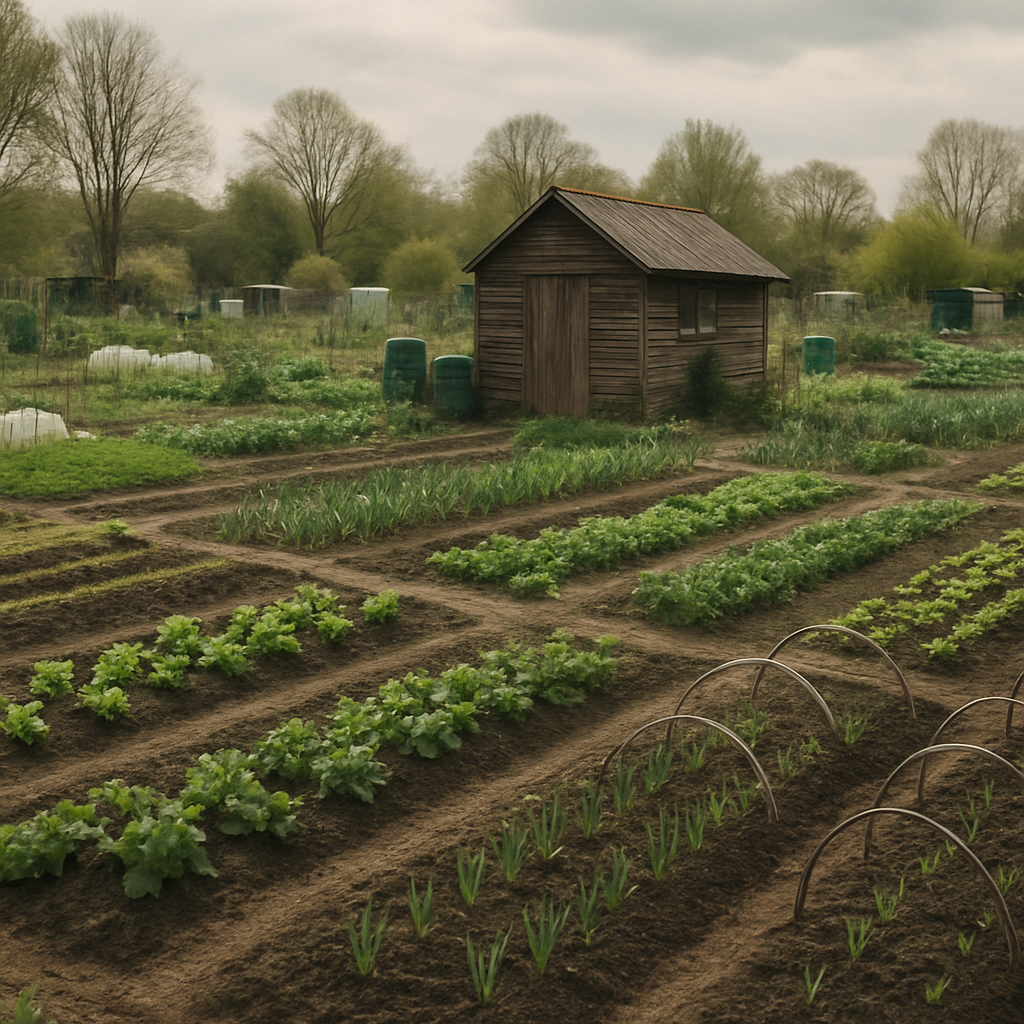
    A thriving British allotment site in spring with vegetable beds and a traditional wooden shed

    A tradition that has earned its stripes

    Allotments are not a new idea dressed up in contemporary packaging. The Allotments Act 1908 obliged local authorities to provide land for working people to grow food. Before that, similar land rights existed under various Poor Law provisions going back centuries. The Dig for Victory campaign during the Second World War turned allotments into a patriotic act, with something close to 1.4 million plots in use by 1943. That history sits in the soil whether you think about it or not. When you plant a row of runner beans on a plot in Sheffield or Swansea, you are doing something people have done on that same patch for generations.

    That continuity is not sentimental nonsense. It is genuinely grounding, especially at a time when so much of daily life feels disposable and fast-moving. The allotment runs on its own clock. Seeds do not care about deadlines. Soil does not respond to urgency. You cannot rush a leek.

    Why more people are getting on the waiting list right now

    The practical case has strengthened considerably. Food prices in British supermarkets have risen sharply over the past few years, and growing your own courgettes, tomatoes, and salad leaves does make a measurable dent in the weekly shop. A packet of tomato seeds costs under £3. A healthy plant, given decent compost and a bit of sunshine, will produce fruit from July through to October. The arithmetic is not complicated.

    There is also the mental health argument, and it is a strong one. Research published by the University of Exeter found that people who spent time gardening reported significantly lower rates of anxiety and depression than those who did not. The NHS has been quietly expanding social prescribing schemes that include gardening and allotment programmes for exactly this reason. Getting your hands dirty, literally, turns out to be rather good for you.

    Gardening gloves and trowel on freshly turned soil at a British allotment

    Then there is the social dimension, and this is perhaps the most underappreciated part. A British allotment site is one of the few remaining places where people of genuinely different ages, backgrounds, and opinions end up next to each other without any particular agenda. You help someone carry a water butt. They show you how to earth up your potatoes. A conversation starts. A friendship, sometimes. It is the kind of organic community that urban planners spend fortunes trying to engineer and allotments produce naturally, for the price of a plot rental that typically runs between £30 and £80 per year depending on your council.

    Getting started without the overwhelm

    The biggest mistake new plot holders make is trying to tackle everything at once. An allotment, particularly one that has been neglected by a previous tenant, can look utterly daunting in March. Brambles, compacted soil, mystery lumps under black polythene. Do not attempt to clear the whole thing in a weekend. Pick a corner, clear it properly, and grow something in it. Success in a small area is far more motivating than a half-cleared plot that still looks like a building site in June.

    Easy wins for beginners include courgettes (almost comically productive once established), salad leaves (cut and come again, ready in weeks), and radishes (sown in April, eaten in May). Onion sets are forgiving, potatoes are satisfying to dig up, and peas give you something to eat straight off the vine while nobody is looking. Save the tricky stuff, the celeriac, the cauliflowers, the artichokes, for your second or third year once you understand your soil and your microclimate.

    Joining your local allotment association, if your site has one, is genuinely worth doing. Experienced plot holders are almost universally generous with advice, surplus seedlings, and the kind of specific local knowledge that no gardening book can give you. They know which varieties do well in your particular patch. They know which pests tend to arrive when. They know which end of the site gets waterlogged in November.

    The bigger picture: what allotments say about Britain

    There is a version of British identity that gets talked about a great deal in the abstract. Resilience, community, making do, quiet pride in practical things done well. The allotment lives all of that out in a completely unselfconscious way. Nobody on an allotment site is performing Britishness. They are just getting on with it, which is, come to think of it, about as British as it gets.

    Small businesses have noticed the trend too. Garden centres like Dobies and Thompson and Morgan have reported strong seed sales for several consecutive years. Independent tool makers have seen renewed interest in quality hand tools built to last rather than cheap alternatives. There is a quiet pride in buying something made properly and using it for twenty years. If you run a small gardening-adjacent business and want more people to find you online, it is worth knowing that something as simple as a free SEO audit can reveal exactly where your visibility is falling short.

    The British allotment revival is not a passing trend dressed up in nostalgia. It is a practical, community-minded, genuinely healthy way to spend time that connects people to the land, to each other, and to something that has been part of this country’s fabric for well over a century. Get your name on the waiting list. It is absolutely worth the wait.