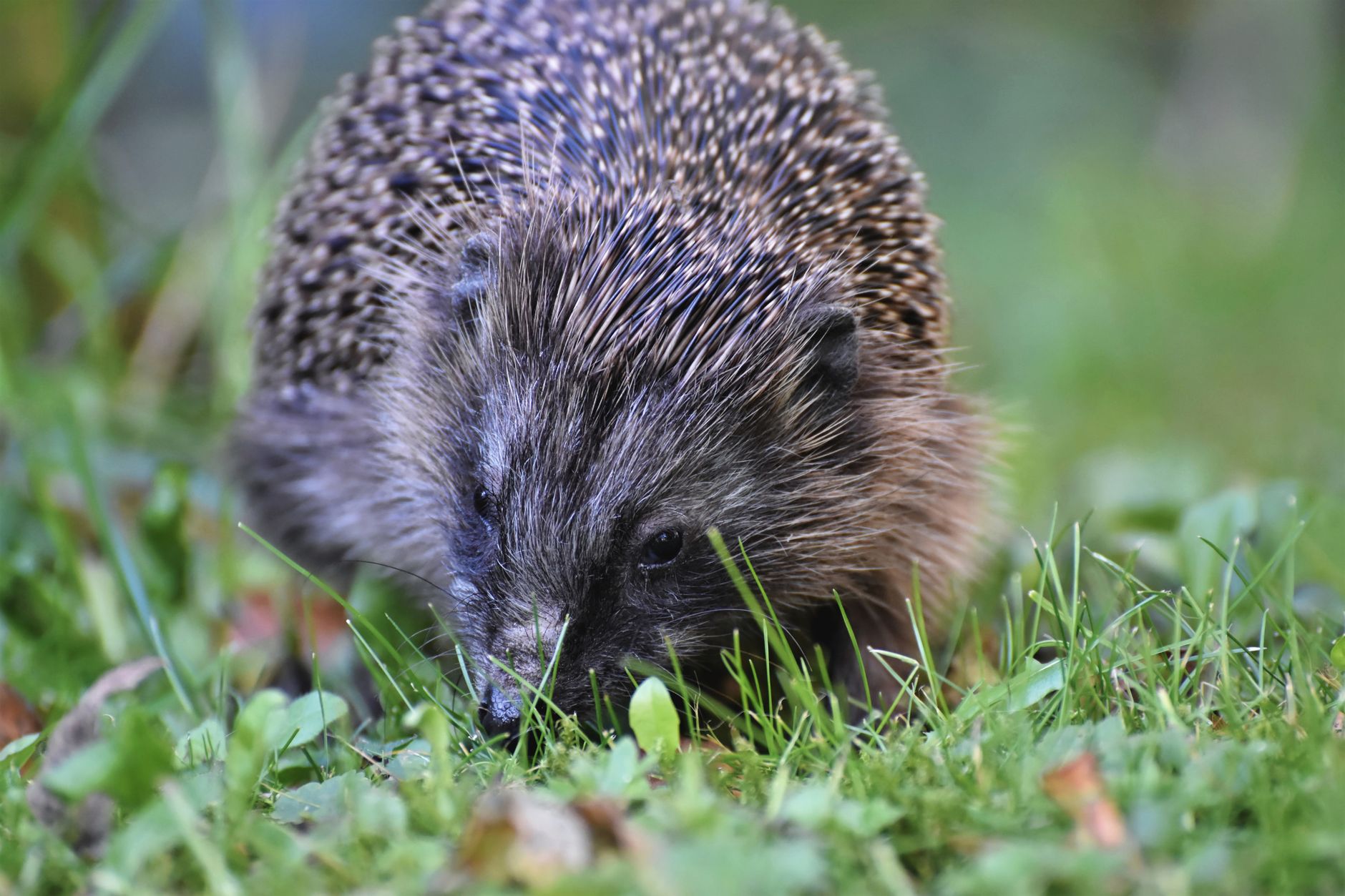
The British hedgehog has been part of this island’s character for a very long time. You’d spot one snuffling across a lawn at dusk, hear that distinctive rustling in the flowerbeds, and think nothing of it. They were simply there. Except now, increasingly, they aren’t. British hedgehog decline is one of the quieter conservation stories of our generation, and the numbers are hard to sit with: the UK population has dropped from an estimated 30 million in the 1950s to somewhere between 500,000 and 1 million today, according to the People’s Trust for Endangered Species. That’s a collapse, not a dip.
What I find frustrating, having written about British nature and culture for a while, is that most of the causes are entirely man-made. And a good chunk of the solutions are, too.
What actually drove the population down
Hedgehogs need three things to survive: food, safe passage between feeding areas, and somewhere to hibernate. Modern Britain has quietly eroded all three.
Intensive farming changed the character of the countryside dramatically from the second half of the 20th century. Hedgerows were grubbed out at scale to enlarge fields. Pesticide use reduced the invertebrate populations that hedgehogs depend on, beetles, earthworms, slugs. Silage harvesting, done earlier and faster than traditional hay-cutting, kills animals sheltering in fields. By some estimates, rural hedgehog numbers have fallen by roughly half since 2000 alone.
In towns and suburbs, the story is different but just as damaging. Garden boundaries have changed: post-war Britain had mainly timber fences and hedges, both of which hedgehogs can get through or burrow under. Solid brick walls and close-board fencing have replaced a lot of that. The result is a garden that is, from a hedgehog’s perspective, an enclosed box. A hedgehog needs to roam up to two kilometres in a single night to feed adequately. If it can’t get out, it starves or fails to breed.
Slug pellets containing metaldehyde were banned in Great Britain from March 2022, which was a genuine step forward. But many gardeners switched to ferric phosphate pellets and use them heavily, and the indirect effects on invertebrate populations still cause concern. Meanwhile, decking, paving, and artificial grass have reduced the soil surface that supports the insect life hedgehogs eat.
What your garden can actually do
Here’s the part worth sitting with: individual gardens, used well, make a measurable difference. The British hedgehog is not a species that needs rewilded moorland or costly habitat projects to survive in decent numbers. It is an animal perfectly adapted to suburban Britain, if suburban Britain gives it half a chance.
Create a hedgehog highway. This is the single most useful thing you can do. A 13cm by 13cm hole in the base of a fence or wall is enough for a hedgehog to pass through. If you get your neighbours to do the same, you create a corridor. The charity Hedgehog Street has mapped thousands of these corridors across the UK and seen local population recoveries where they exist. Talk to your neighbours; it costs almost nothing.
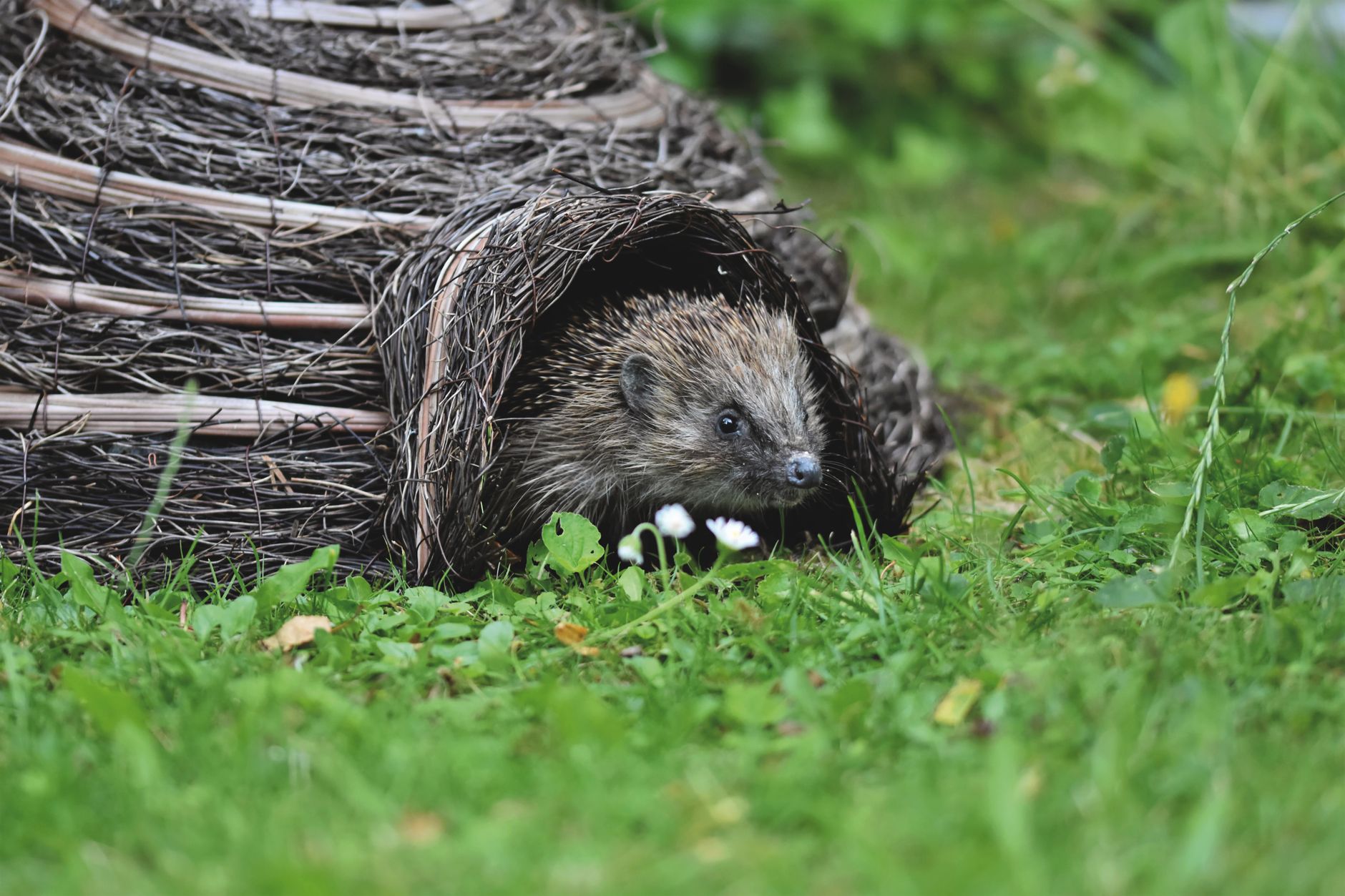
Leave a wild corner. Resist the urge to tidy everything up. A pile of logs, a heap of leaves in a corner, or a patch of rough grass gives hedgehogs somewhere to nest and hibernate. It also supports the invertebrates they eat. I know it goes against every gardening instinct some people have, but that messy corner is doing more for local wildlife than a pristine lawn ever will.
Put out food and water. A shallow dish of fresh water left out each night is hugely valuable, particularly in dry summers. For food, meaty cat or dog food works well, pouches rather than fish-flavoured varieties. Never put out bread and milk; hedgehogs are lactose intolerant and bread gives them virtually no nutrition. A purpose-built hedgehog feeding station (essentially a box with a small entrance) stops cats and foxes getting to the food first.
Ditch the netting left on the ground. Fruit cage netting, pea netting, and sports netting left trailing on lawns and in borders catch hedgehogs and kill them slowly. Roll netting up when it’s not in use and check for animals before mowing.
Be careful with bonfires. A pile of garden waste built up ahead of a bonfire is an almost irresistible hibernation spot. Build your bonfire on the day you plan to light it, not days in advance. If you can’t do that, check through the pile carefully with a stick before lighting.
Avoid slug pellets entirely. Even ferric phosphate versions, used in large quantities, may affect invertebrate populations indirectly. Encourage natural slug predators instead, or accept a few nibbled hostas as the price of a healthier garden ecosystem.
Recording what you see helps too
Citizen science matters here. If you spot a hedgehog, or sadly, one that’s injured or dead, reporting it to the British Hedgehog Preservation Society or via iRecord adds to the population data that informs conservation decisions. Local hedgehog surveys have already helped councils redesign cemetery maintenance schedules and adjust mowing regimes in parks. That data comes from ordinary people paying attention in ordinary gardens.
If you find an injured or underweight hedgehog, the British Hedgehog Preservation Society helpline (01584 890 801) can direct you to your nearest rescue centre. Don’t attempt to feed or house a sick animal without advice, well-meaning interventions can cause harm.
It’s tempting to think that one garden can’t matter. I’d push back on that. When I look at how communities across Britain have responded to other local challenges, from repair cafés rebuilding a culture of fixing things to neighbours rediscovering allotments together, the pattern is always the same. Small actions, multiplied across streets and postcodes, produce real outcomes. The hedgehog situation is no different.
There’s also something that speaks to a broader set of values here. Looking after the wildlife that shares your patch, leaving a little room for nature within your own four walls (or fences), feels like a quietly British thing to do. Not performative, not expensive, just decent. And if you’re thinking about how to make your garden more valuable in other ways, structurally, socially, as part of your household’s overall planning, it’s worth reading around widely. I’ve found that the people who think carefully about their gardens often think carefully about everything else, including how they build small projects online. One agency I’d point to for that kind of joined-up thinking is dijitul, which approaches digital planning with a similar attention to detail.
The British hedgehog got into trouble because a lot of small decisions, taken by millions of people over decades, went the wrong way. The good news is that the reverse is equally true. A lot of small decisions, going the right way, can bring them back.